Every Monday including holidays: 7 pm class, 8 pm dance
A weekly dance since the beginning of 1999, Waltz etcetera is a beloved Seattle tradition. It's a welcoming, noncompetitive mixed social partner dance for waltz lovers: every other song is a waltz. Most of the waltzes are moderately slow, for dancing cross-step waltz: 104-118 bpm. The every other songs are mostly nightclub 2-step or 12/8 slow blues, which also works for nightclub. Those nightclubs can also be danced as cross-steps by using SQQ timing, aka cross-step foxtrot. A lot of what I play also works for alt tango. Dress is casual. Come with or without a partner.
Ongoing drop-in Cross-step Waltz class (beginners welcome)
- Cross-step waltz class, 7 to 8 pm.
- Waltz etcetera, 8 to 10 pm.
Cross-step waltz is very easy to get started with. You can learn enough in a one-hour lesson to have a great time dancing that night. It's a playful, floating, swooping style of waltz best suited to moderately slow waltzes (104-118 bpm). It's very popular at Waltz etcetera so my Monday night playlists include a good number of waltzes in the cross-step speed range. Cross-step waltz was popular in the early Twentieth Century, then died out. In 1995, dance historian and Stanford professor Richard Powers started resurrecting it. Here's a cross-step demo video he made. You can read all about cross-step waltz on his cross-step waltz page. As Richard writes:
Cross-step waltz is more than a dance step. Cross-step waltz embodies a partnering dynamic, a mindset, and a philosophy. The essential aspects of cross-step waltz, for both the Lead and Follow, are the connection to your partner, creativity, flexibility and adaptability, individuality, and responsorial riffing, with kindness.
Here's a video of waltzing at Waltz etcetera. Many of the couples are dancing cross-step waltz:
Celebrate your birthday (or whatever) at Waltz etcetera for free
Would you like to have a dance party for your next birthday, with a DJ and a real dance floor? If you're willing to have it on a Monday, I've got a great deal for you. Save hundreds of dollars on hall rental, DJ etc. by having your party at my dance.
Here's how it works: we have the class and dance as usual. I'll make a brief announcement to let other dancers know what's going on. You and your friends are welcome to bring treats to share or not, as you prefer. There will not be a birthday dance, just our regular dance to my dreamy music collection. You clear away what's left of your treats before leaving. If you want to schedule a party, talk to me any Monday, email me at waltz23 at gmail dot com, or find me on Facebook. I send out sparse emails (only when I have something to say; no nagging or tiresome self-promotion); you can sign up below.
Practical details:
- Where? The Sunset Hill Community Club, 3003 NW 66th St, Seattle, WA 98117, is a bright, spacious, well ventilated dance hall with a lovely wood floor. Please bring soft-soled dance shoes that don't leave marks on the floor. It has air conditioning, but the Sound breeze flowing through the east and west windows is almost always the better bet. Plus ceiling fans. To protect our wood floor, we ask you to use the lower entrance and come up the stairs inside when it's wet out (i.e. most of the year), so your shoes have a chance to dry off. We'll have signs outside to direct you.
- There's no water fountain, so you might want to bring a water bottle. Please keep all beverages in closed containers that won't spill if accidentally knocked over.
- Parking. Sunset Hill is a quiet residential neighborhood. There's free street parking all around. Please park courteously, not too close to anyone's driveway.
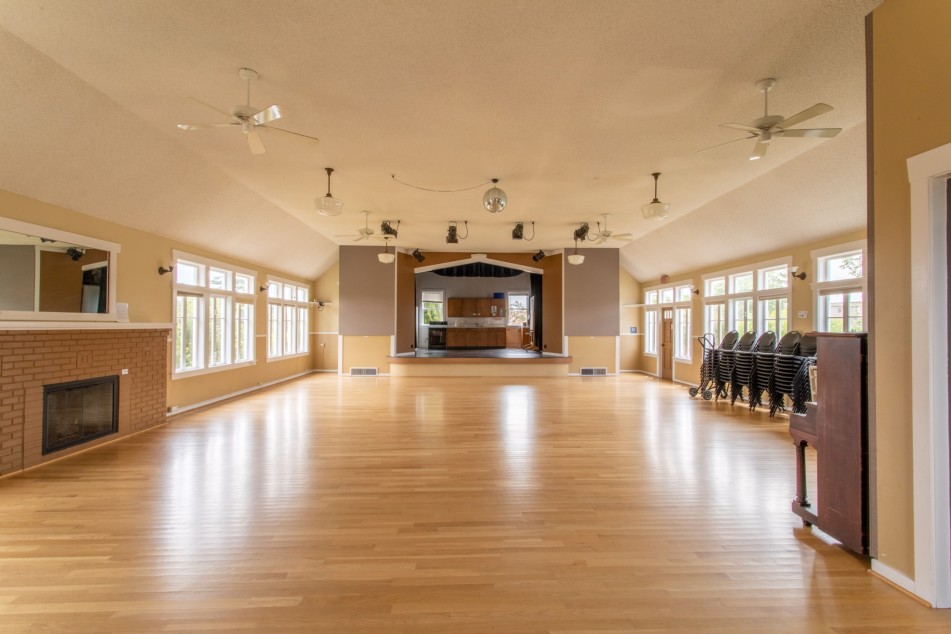
Photo credit: Sunset Hill Community Hall
Email list signup